The Ultimate Casablanca Travel Guide: Beyond the Hollywood Myth
This Casablanca travel guide invites you to look beyond the Hollywood myth of smoky cafés and wartime romance. While the name carries the weight of a cinematic legend, the real city is one of North Africa’s most dynamic and surprising destinations. This is the true Casablanca: Morocco‘s economic powerhouse, a sprawling metropolis on the Atlantic where breathtaking modernity lives side-by-side with deep-rooted tradition.
Indeed, this isn’t just a city of history; Casablanca represents the future. Vibrant art scenes, world-class cuisine, and an energy all its own define this incredible place. For instance, consider the colossal Hassan II Mosque touching the heavens. Then, picture the romantic Art Deco buildings lining its grand boulevards. Unquestionably, Casablanca challenges every preconception. It asks you to look deeper, explore its hidden corners, and discover the soul of the “White City,” or Dar El Beïda. This was the name Sultan Mohammed Ben Abdallah gave it in the 17th century. This exhaustive guide is your key to unlocking it all. It’s a deep dive into the logistics, landmarks, and local life that make this city an essential Moroccan experience.
Part 1: A Guide to Casablanca Pre-Travel Essentials
A great trip invariably begins long before you board the plane. As a matter of fact, proper planning can transform a good vacation into an unforgettable one. This section covers all the logistical details you’ll need to arrange a smooth, stress-free, and perfectly timed visit. Think of this as the foundation of your Casablanca travel guide, as it covers everything from navigating the airport to understanding local customs.
With this in mind, we’ll explore the best times of year for perfect weather. We’ll also break down your transportation options for navigating the sprawling city. In addition, we’ll suggest neighborhoods that cater to every type of traveler. By handling these essentials first, you’ll be free to immerse yourself completely in the magic of Morocco’s most cosmopolitan city.
When to Visit Casablanca: A Seasonal Guide
Choosing the right time to visit Casablanca can significantly impact your experience, largely because the city’s climate and crowds change with the seasons. Fortunately, its Atlantic coastal location gives Casablanca a temperate Mediterranean climate. As a result, the city avoids the extreme heat of inland destinations like Marrakech.
The Ideal Time: Spring and Autumn
Generally speaking, the shoulder seasons offer the best time to visit: spring (April to June) and autumn (September to November). During these months, the weather is pleasantly warm and sunny. Specifically, average temperatures range from 15°C to 25°C (60°F to 77°F). Unquestionably, this climate is ideal for long days of walking and exploring outdoor sights. It’s also perfect for sitting at sidewalk cafés. Furthermore, you’ll find fewer crowds than in the peak summer months, which leads to a more relaxed atmosphere and often better prices on flights and accommodation.
The Peak Season: Summer
Summer (July and August), on the other hand, marks the peak tourist season in Casablanca. The weather turns hot and humid, with temperatures often climbing above 30°C (86°F). While the coastal breeze provides some relief, the heat can still feel intense during the middle of the day. Since this is the busiest time of year, you should expect larger crowds at major attractions and higher prices for hotels. Therefore, if you travel in summer, plan your outdoor activities for the early morning or late afternoon.
The Quiet Season: Winter
In contrast, winter (December to February) in Casablanca is mild but can be wet. Temperatures are cool, typically ranging from 8°C to 17°C (46°F to 63°F). This season also sees the most rain. Although you won’t experience freezing weather, you should pack layers and a waterproof jacket. Nevertheless, the upside of visiting in winter is the lack of crowds and the lowest prices of the year. For the budget-conscious traveler, it can certainly be a wonderful time for a quiet trip.
Getting Around: A Casablanca Transport Guide
As Morocco’s primary economic hub, Casablanca is exceptionally well-connected. Most international visitors, for example, will arrive at Mohammed V International Airport (CMN). From the airport, the most reliable way into the city is the train, which runs from the airport’s station to the Casa Port or Casa Voyageurs stations. Taxis are also readily available. However, you should agree on a fare before your journey or insist the driver uses the meter.
Once in the city, the Casablanca Tramway offers a modern, clean, and efficient way to travel. For shorter distances, petit taxis (small, red taxis) are ubiquitous. As a rule, always ensure the driver turns on the meter (compteur) when you get in. For trips outside city limits, on the other hand, you’ll need a grand taxi (larger, white taxis). These operate on fixed routes. In recent years, ride-sharing apps like Careem have also become a convenient, fixed-price alternative. Understanding these options is essential for any Casablanca travel guide.
Where to Stay in Casablanca: A Neighborhood Guide
Casablanca offers a diverse range of accommodation options. These are spread across distinct neighborhoods, each with its own character. For those who love a modern, upscale atmosphere, for instance, the Maarif district is an excellent choice. Close by, the Anfa district stands as the city’s most exclusive residential area. It’s perfect if you’re looking for five-star luxury and tranquility.
Alternatively, travelers seeking a more traditional experience will find the Habous Quarter (New Medina) ideal. This charming area blends French colonial architecture with traditional Moroccan design. Consequently, staying here puts you within walking distance of the Royal Palace. On the other hand, staying in the City Center near the Old Medina puts you right in the heart of the action. You’ll have easy access to Art Deco architecture, the central market, and major transport hubs. Choosing the right neighborhood is a crucial step, and this Casablanca travel guide aims to make that decision easier.
Money in Casablanca: A Guide to Budgeting & Tipping
The official currency of Morocco is the Moroccan Dirham (MAD). Although upscale establishments widely accept credit cards, Morocco still remains a cash-based society. Consequently, you will absolutely need cash for taxis, small shops, and market purchases. For this reason, we recommend withdrawing Dirhams from an ATM upon arrival for the best exchange rates.
Casablanca can cater to any budget. A budget traveler, for example, can expect to spend around 300-500 MAD ($30-$50 USD) per day. Meanwhile, a mid-range traveler might spend 700-1200 MAD ($70-$120 USD) per day. For a luxury experience, of course, the budget can easily exceed 2500 MAD ($250 USD) per day. Tipping is an integral part of Moroccan culture. In restaurants, for instance, a tip of 10-15% is standard. For smaller services, 5-10 MAD is appropriate. For taxi drivers, finally, rounding up the fare is common practice.
Safety & Etiquette for Your Casablanca Visit
Casablanca is generally a safe city for tourists. But like any large metropolis, you should exercise common sense. Petty crime, for instance, can occur in crowded areas, so keep your valuables secure. We also advise against walking alone in deserted areas late at night.
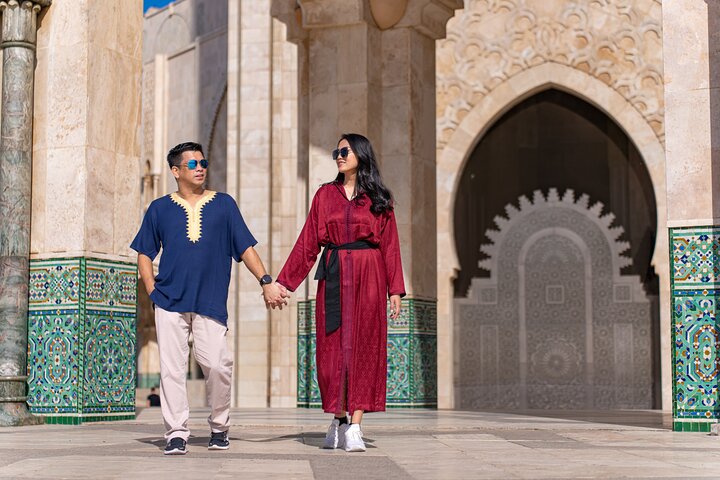
Above all, respecting local customs will greatly enhance your experience. Morocco is a predominantly Muslim country. Therefore, you should dress modestly, especially when visiting religious sites. Also, always ask for permission before taking a photo of a person. Finally, learning a few basic Arabic or French phrases will be greatly appreciated. Words like “As-salamu alaykum” (Hello) and “Shukran” (Thank you) will undoubtedly open many doors.
Part 2: The Best Things to Do: A Guide to Casablanca Attractions
Now that you’ve sorted the logistics, it’s time for the adventure to begin. In this section of our Casablanca Travel Guide, we will explore the best things to do in Casablanca. Specifically, we’ll cover everything from its most iconic landmarks to its hidden cultural gems. Casablanca’s true identity reveals itself through these sights, and each one tells a piece of the city’s epic story.
This is a city of grand statements and secret corners, where the monumental and the modest coexist in a fascinating urban tapestry. You will stand in awe of the architectural marvel that is the Hassan II Mosque. Then, you’ll get lost in the authentic maze of the Old Medina. You’ll also discover the polished charm of the French-designed Habous Quarter. In short, this is the most comprehensive section of our Casablanca travel guide, detailing what to see and the stories behind the stones.
A Must-Visit Casablanca Attraction: The Hassan II Mosque
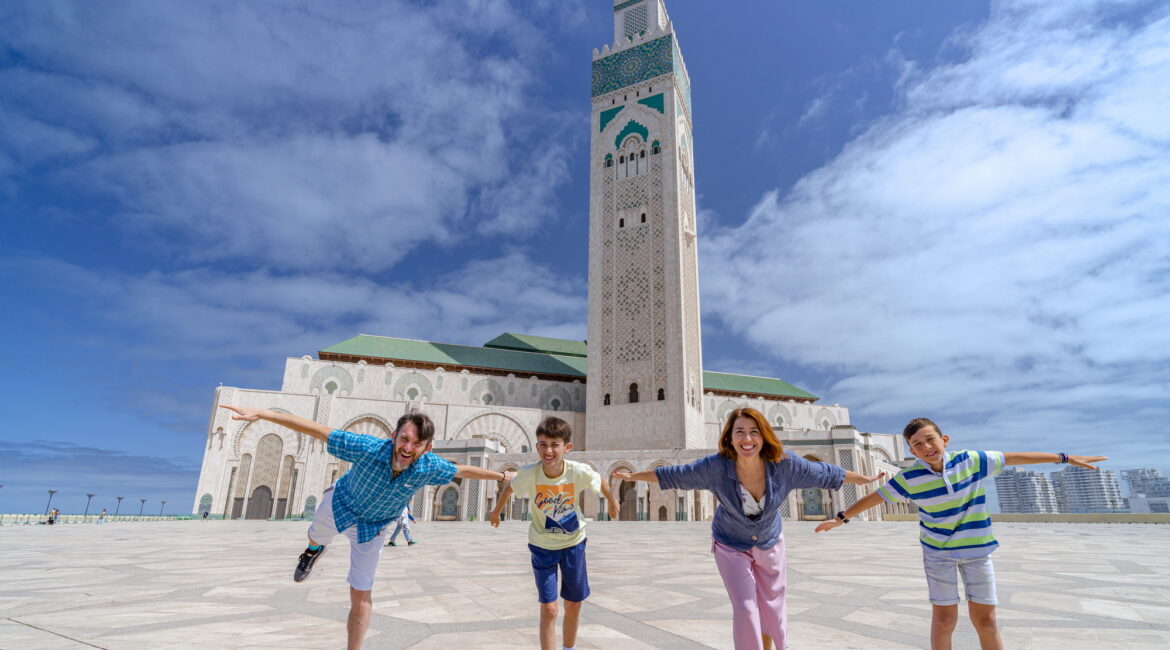
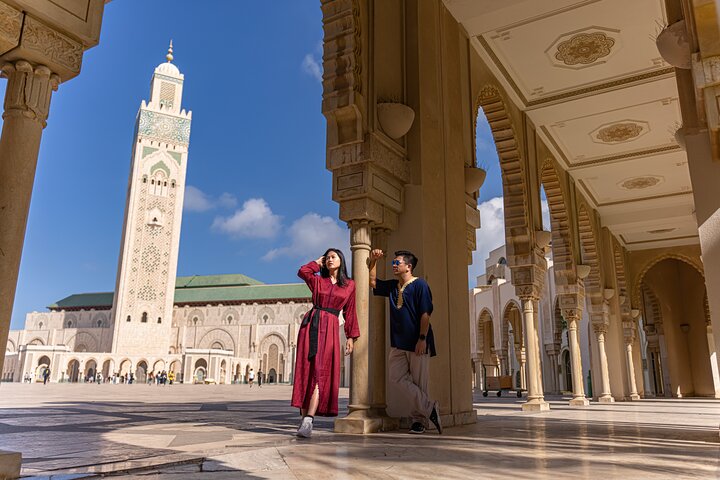
No visit to Casablanca is complete without witnessing the Hassan II Mosque. It is more than a place of worship. Indeed, it is a declaration of faith and a masterpiece of craftsmanship. It’s also a symbol of the nation. King Hassan II commissioned the mosque, and subsequently, thousands of Morocco’s most skilled artisans completed it in 1993. Its location is as dramatic as its architecture. Builders constructed it on a rocky outcrop reclaimed from the Atlantic, so its foundation seemingly rises from the waves.
Everything about the mosque is monumental. Its minaret, for instance, stands at 210 meters (689 feet), which makes it the second-tallest in the world. At night, a laser beam shines from its peak, pointing towards Mecca. The vast main prayer hall can hold 25,000 worshippers, while the outside courtyard can accommodate another 80,000. One of its most incredible features is the retractable roof, which opens to the sky. Similarly, the interiors are a symphony of hand-carved stone, intricate marble, and stunning chandeliers that showcase the very best of Moroccan artistry.
Crucially, the Hassan II Mosque welcomes non-Muslim visitors for guided tours. The administration offers these tours several times a day, and they are the only way to see the mosque’s stunning interior. Remember to check tour times in advance and dress modestly for your visit. Without a doubt, walking through the vast, ornate prayer hall is a truly awe-inspiring experience. It’s an unforgettable highlight.
Exploring Casablanca: The Historic Old Medina
Stepping into Casablanca’s Old Medina is like stepping back in time. This labyrinth of narrow, winding alleyways offers a stark, authentic contrast to the modern city. This is not the pristine, tourist-oriented medina of Marrakech. Instead, it is a gritty, lived-in neighborhood—a chaotic and vibrant hub of daily life.
As you wander through the maze, your senses will surely be overwhelmed. Tiny workshops and bustling market stalls line the narrow streets. Here, you’ll see artisans hammering metal and vendors selling fragrant spices. All in all, it’s a fantastic place to observe local life. Just be prepared to haggle good-naturedly. Key landmarks within the medina include the Great Mosque and the northern bastion, which offers a fantastic view over the port.
Ultimately, navigating the Old Medina is a disorienting experience, and that is part of its charm. So, allow yourself to get a little lost and see where the alleys lead. While it is generally safe during the day, you should still be mindful of your belongings. In short, the Old Medina provides a raw, energetic, and authentic experience.
Visit Casablanca’s Habous Quarter (New Medina)
If the Old Medina is Casablanca’s historic heart, then the Habous Quarter is its elegant soul. The French built the Habous, often called the “New Medina,” in the 1930s. Its design brilliantly fuses French colonial planning with traditional Moroccan styles. As a result, the district feels both authentically Moroccan and charmingly European.
Exploring the Habous on foot is a delight. Indeed, it offers a much calmer and more organized shopping experience than the Old Medina. Here you can browse for high-quality Moroccan crafts, from leather goods to brass lanterns. In addition, the quarter is also renowned for its specialized souks. These include the fragrant olive souk and some of the city’s best patisseries.
Beyond the shops, the Habous Quarter holds the Mahkama du Pacha. This magnificent building was a former pasha’s courthouse, and it’s a masterpiece of Hispano-Moorish design. It has breathtaking interiors of carved wood and intricate tilework. Although it’s an administrative building, you can often ask the guards for permission to look inside.
Casablanca Attractions: The Art Deco District
Casablanca is home to a significant concentration of Art Deco architecture. Of course, this is a direct legacy of the French Protectorate era. During that time, French architects used the city as a canvas for their new ideas. They created a unique style that blended European Art Deco with traditional Moroccan motifs.
The best way to experience this is by walking along the grand Boulevard Mohammed V. Magnificent buildings line this major artery, featuring clean geometric lines, curved corners, and decorative ironwork. For example, key buildings to look out for include the iconic Cinema Rialto and the grand Central Post Office. Another central point is the Place Mohammed V. This is the city’s main administrative square, and it is surrounded by impressive public buildings from the 1920s and 30s. Exploring this district certainly reveals a crucial chapter in Casablanca’s history.
Things to Do in Casablanca: Relaxing on The Corniche
When the city hustle becomes too much, locals and visitors alike head to The Corniche. This long, sweeping promenade stretches for several kilometers along the Atlantic coast. It offers fresh sea air, stunning ocean views, and a lively, resort-like atmosphere.
During the day, The Corniche is a popular spot for jogging, strolling, and relaxing. People gather on Ain Diab beach, for instance. A succession of cafés, ice cream parlors, and restaurants line the promenade. As the sun begins to set, the area comes alive in a different way, offering spectacular views. In addition, The Corniche is also Casablanca’s primary entertainment district. It’s home to exclusive beach clubs, sophisticated bars, and nightclubs. At its southern end, you’ll also find the Morocco Mall, one of Africa’s largest shopping centers.
Part 3: The Casablanca Food Guide: What to Eat & Drink
To truly understand a culture, you must taste its food. No Casablanca travel guide would be complete without a deep dive into its food, and this section takes you right to the heart of its culinary culture. Indeed, it’s a delicious melting pot of Amazigh (Berber), Arab, Andalusian, and French influences. This fusion results in a rich and flavorful cuisine. A culinary journey through Casablanca is truly an adventure for the senses. You’ll find everything from fragrant tagines to fresh Atlantic seafood.
This guide will take you into the heart of Casablanca’s food culture. First, we’ll explore must-try national dishes. Then, we’ll guide you to the best places to eat. Finally, we’ll introduce you to the city’s vibrant café culture. So prepare your appetite, because this is where your journey gets truly delicious.
What to Eat: A Guide to Essential Moroccan Dishes
Chefs and food lovers celebrate Moroccan cuisine for its subtle spices. They also praise its intriguing flavor combinations. At the heart of it all is the Tagine. This savory stew takes its name from the conical earthenware pot where chefs slow-cook it. The pot’s shape, in fact, results in incredibly tender meat and vegetables. Popular variations include lamb with prunes and chicken with preserved lemons.
Another cornerstone is Couscous. It’s a complete dish of steamed semolina grains with a rich stew, which usually contains meat and seven vegetables. Families traditionally eat it on Fridays. In addition, don’t miss Pastilla. It’s a unique savory and sweet pie. Chefs make it with layers of paper-thin pastry, filling it with shredded chicken, almonds, and spices. Then, they dust it with powdered sugar and cinnamon. Without a doubt, it is a complex and delicious masterpiece.
For a true taste of local life, you must try the street food. For example, seek out a bowl of Harira, the traditional Moroccan lentil and tomato soup. For the more adventurous, look for stalls selling Babbouche (snails), which are cooked in a fragrant, spicy broth. Of course, no meal is complete without Moroccan Mint Tea. It’s a symbol of hospitality that people serve everywhere.
Where to Eat in Casablanca: A Restaurant Guide
Casablanca’s dining scene caters to all tastes. The city, for example, offers exceptional fine dining for a special occasion. Many of these restaurants are located along The Corniche with stunning ocean views. Le Cabestan, for instance, is famous for its fresh seafood and cliffside setting. For a more traditional but upscale experience, conversely, La Sqala offers authentic Moroccan classics in a beautiful historic fortress.
For a more casual meal, dive into the city’s many traditional restaurants. The Habous Quarter has several excellent options. However, the best way to find a great local spot is to simply explore. Wander the streets of the Maarif or City Center districts, and look for small restaurants filled with locals. The Central Market (Marché Central) is another must-visit for food lovers. Here, you can enjoy incredibly fresh grilled fish and seafood that vendors will cook for you on the spot.
Finally, don’t underestimate the importance of café culture. Cafés are the social heart of the city. Ordering a coffee is a great way to take a break and immerse yourself in the local rhythm. The most popular local order is a nous-nous, which means “half-half” espresso and steamed milk. Simply find a chair on a sidewalk terrace and enjoy the moment.
Part 4: A Guide to Morocco Tours from Casablanca
Casablanca itself offers more than enough to keep you captivated. But its strategic location also makes it an excellent base for broader exploration. A short journey by train or car can transport you to ancient port cities and royal capitals. Therefore, taking a Tour from Casablanca is a fantastic way to enrich your Moroccan experience. This section of our Casablanca travel guide highlights the most rewarding excursions.
These range from simple day trips to comprehensive multi-day adventures, including the epic desert tour from Casablanca. Furthermore, you can easily integrate these journeys into larger Casablanca Morocco holiday packages.
Tours from Casablanca: A Day Trip to Rabat
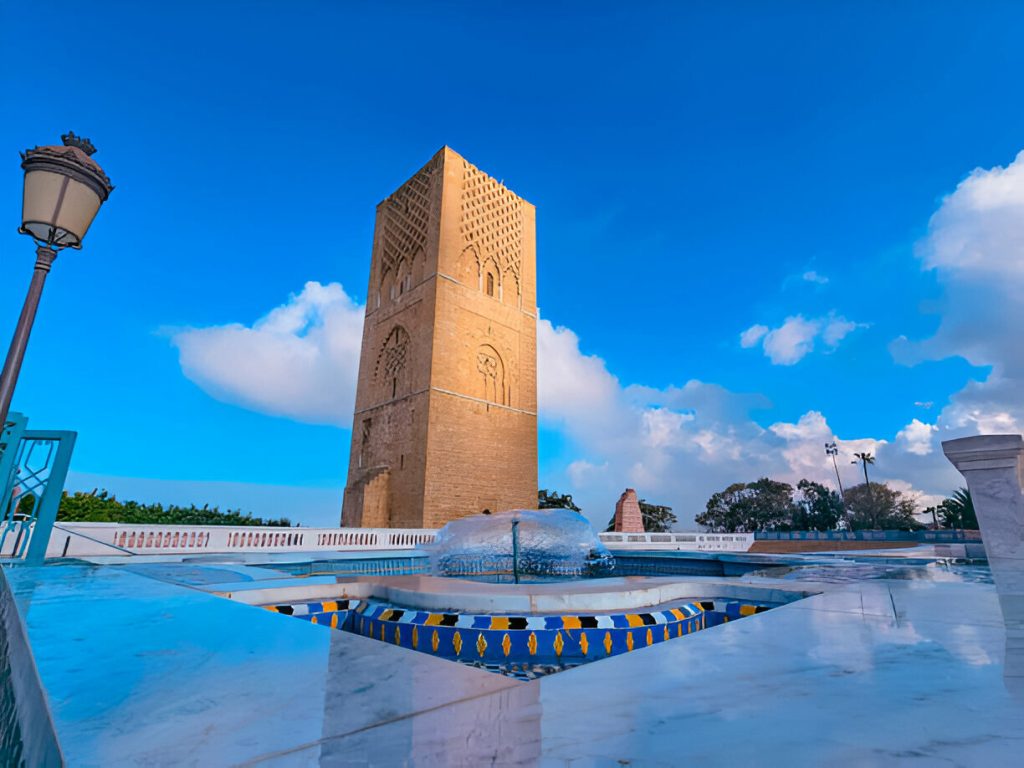
Just a one-hour train ride north of Casablanca lies Rabat, the political capital of Morocco. Rabat offers a world of difference from Casablanca’s atmosphere; specifically, it’s clean, green, and surprisingly relaxed. Your first stop should be the magnificent Kasbah of the Udayas. This is a picturesque fortress with narrow, blue-and-white streets. From there, you can explore the Hassan Tower. You can also visit the opulent Mausoleum of Mohammed V, a masterpiece of modern Alaouite dynasty architecture.
A Guide to the Casablanca to Marrakech Tour
One of the most popular routes for any traveler is the Casablanca to Marrakech tour. The three-hour train ride takes you from the modern metropolis to the vibrant “Red City.” Marrakech delivers a sensory explosion. Specifically, you’ll find bustling souks, stunning palaces, and the legendary Djemaa el-Fna square. At night, the square comes alive with storytellers, musicians, and food stalls.
Moreover, Marrakech serves as a perfect launchpad for further exploration. Many travelers extend their journey with exciting Marrakech Excursions. These popular day trips from Marrakech let you see Morocco’s incredible diversity. You can, for instance, take a trip to the starkly beautiful Agafay Desert from Marrakech. This gives you a taste of the desert without the long journey south. Meanwhile, history lovers can visit the iconic UNESCO site of Ait Benhaddou from Marrakech. This fortified village has served as a backdrop for countless films. For a change of pace, enjoy the refreshing sea breeze of Essaouira from Marrakech. Lastly, nature lovers can escape to the Atlas Mountains with popular trips like the scenic Ourika Valley from Marrakech or the stunning Ouzoud Waterfalls from Marrakech.

Tours from Casablanca: The Journey to Chefchaouen
For a truly magical experience, consider a Casablanca to Chefchaouen tour. The journey is longer than a day trip, so it’s best done over 2-3 days. But the trip to the “Blue Pearl” of Morocco is unforgettable. Chefchaouen is nestled in the Rif Mountains and is famous for its enchanting medina. Here, residents have painted nearly every building, street, and alleyway in mesmerizing shades of blue.
The journey itself takes you through beautiful green landscapes. Once there, you can spend your days getting lost in the blue-washed labyrinth. You can also shop for unique local handicrafts and hike in the surrounding mountains. All in all, this tour offers a peaceful, photogenic contrast to the energy of Casablanca and Marrakech.
The Epic Desert Tour from Casablanca to the Sahara
For the ultimate Moroccan adventure, nothing compares to the Sahara desert trip from Casablanca. This multi-day journey takes you across the Atlas Mountains and into the heart of the world’s most famous desert. The trip culminates at the iconic Erg Chebbi dunes near Merzouga. This is more than just a tour; in fact, it’s a rite of passage.
The typical Casablanca to Merzouga desert trip takes at least 3 to 4 days. The first day involves a long drive from Casablanca through scenic mountains. Ultimately, the highlight is arriving at the edge of the Sahara. From there, you’ll trade your vehicle for a camel, trekking across the sea of golden sand to a traditional Berber desert camp. A breathtaking sunset over the dunes awaits you. Later, you’ll enjoy a traditional dinner under a blanket of stars and listen to Berber music around a campfire.
For those seeking an elevated experience, it is also possible to book a Private Luxury Sahara Desert Tour from Casablanca. These premium Casablanca desert tours offer the same incredible scenery but with added comfort. For example, they include stays in luxurious desert camps with private tents and en-suite bathrooms. You’ll also enjoy gourmet meals and personalized service. Whether you choose a standard or a private trip from Casablanca to Sahara desert, sleeping in the silence of the Sahara is truly a profound experience.
Part 5: Sample Casablanca Itinerary Ideas
With so much to see, structuring your time is one of the most important parts of using a Casablanca travel guide. To help you, we’ve created a few sample itineraries. We designed these to be logical and efficient, grouping sights by location to minimize travel time. Furthermore, many of these can serve as the starting point for larger Morocco travel packages from Casablanca.
These itineraries provide a framework, whether you have 24 hours or a full week. Feel free to adapt them to your own interests. In short, they are a guide to help you build your perfect adventure. This applies whether you’re sticking to the city or planning Casablanca private tours further afield.
A 1-Day Casablanca Itinerary
- Morning (9:00 AM – 1:00 PM): First, start your day at the Hassan II Mosque with a guided tour.
- Lunch (1:00 PM – 2:00 PM): Then, grab a taxi to La Sqala for a traditional Moroccan lunch.
- Afternoon (2:00 PM – 5:00 PM): Afterwards, briefly explore the Old Medina. Then, take a taxi to the Habous Quarter for a more relaxed stroll.
- Evening (5:00 PM onwards): Finally, head to the Art Deco district. Walk along Boulevard Mohammed V, then settle in for a coffee at a sidewalk café.
A 3-Day Casablanca Itinerary: The Perfect Visit
- Day 1: The Sacred and the Sea. To begin, follow the morning and lunch plan from the 24-hour itinerary. In the afternoon, explore the Old Medina more thoroughly. Then head to The Corniche for a sunset walk and dinner.
- Day 2: Architecture and Markets. Next, start your morning in the Art Deco district. For lunch, head to the Marché Central for fresh grilled fish. Subsequently, explore the Habous Quarter in-depth.
- Day 3: Art, Gardens, and Departure. On your final day, spend the morning at the Villa des Arts or the Museum of Moroccan Judaism. Afterwards, enjoy a peaceful stroll through the Arab League Park before heading to the airport.
Your Casablanca Travel Guide: Final Thoughts
Casablanca is a city of layers and a place that rewards the curious traveler. It may not always offer the picturesque charm of other Moroccan cities. But its appeal is deeper and, perhaps, more profound. It is a city that showcases the real, contemporary Morocco—a nation that proudly looks towards the future while honoring its rich past. From the spiritual grandeur of the Hassan II Mosque to the vibrant energy of its modern districts, Casablanca unquestionably delivers a unique experience.
Ultimately, you can use this Casablanca Travel Guide to explore the city for a few days. Or you can use it as the starting point for extensive tours from Casablanca to the desert or imperial cities. Either way, you will leave with a new appreciation for this misunderstood metropolis. Many tour operators begin their comprehensive Casablanca Morocco holiday packages here for a reason. Indeed, it is the true gateway to the kingdom. Your Moroccan adventure starts in the White City.
FAQ: Your Casablanca Visit
1. Is Casablanca safe for solo female travelers?
Casablanca is generally safe. However, solo female travelers should take extra precautions. For this reason, we highly recommend dressing modestly to avoid unwanted attention. Using ride-sharing apps can also be a more comfortable alternative to hailing taxis.
2. How many days are enough for Casablanca?
While you can see the main highlights in one packed day, this Casablanca travel guide recommends 2 to 3 days as the ideal amount of time. This allows you to explore at a relaxed pace. It also serves as a great start before embarking on a longer tour from Casablanca.
3. Do I need to speak French or Arabic?
Arabic is the official language. However, people in Casablanca widely speak French. In tourist areas, you will find many people who speak English. But learning a few basic Arabic or French phrases will always be appreciated.
4. Is a desert tour from Casablanca worth it?
Absolutely. It’s a long journey, of course. But the Sahara desert trip from Casablanca is a once-in-a-lifetime experience. It showcases the incredible diversity of Morocco’s landscapes. For example, you’ll see everything from the coast to the Atlas Mountains to the iconic dunes of the Sahara.
5. What is the best souvenir to buy in Casablanca?
High-quality leather goods, intricate metal lanterns, spices, and argan oil are all excellent buys. The Habous Quarter is a great place to find them. In fact, you can shop there without the intense hustle of other cities.