Welcome to Fes, the spiritual and cultural heart of Morocco. This city exists outside of time. Here, ancient traditions aren’t relics but form the vibrant, breathing fabric of daily life. Taking a Fes Morocco day tour is more than just sightseeing. It’s an immersion into a 1,200-year-old labyrinth of history, art, and faith. We designed this guide to be your ultimate companion. It will lead you through the winding alleys of the world’s most magnificent living medieval city.
This journey takes you deep inside the UNESCO World Heritage site of Fes el-Bali. This sprawling medina is a car-free zone where every turn reveals a new wonder. You’ll experience the intricate tilework of ancient madrasas and smell the pungent, earthy aromas of the legendary Chouara Tannery. We provide the knowledge and context to turn your visit into an unforgettable adventure. This guide covers everything you need for the perfect Fes Morocco day tour.
Table of Contents
ToggleChapter 1: Understanding Fes – The Imperial Legacy
Before you enter the bustling medina, you should understand Fes’s immense historical weight. Idris I founded the city in 789. It quickly grew into a paramount center of learning, religion, and trade in the Islamic world. As a result, Fes served as Morocco’s capital for several dynasties. Each dynasty left its indelible mark on the city’s architecture and character. This rich imperial legacy is what makes a Fes Morocco day tour so compelling.
The city has three main districts. These are the ancient Fes el-Bali (the old medina), the 13th-century Fes Jdid (the new medina and home to the Mellah), and the modern Ville Nouvelle. The French built the Ville Nouvelle during the protectorate era. Our Morocco Fes Tours focus on the old medina, Fes el-Bali. This area holds immense historical significance. It is so well-preserved that UNESCO declared it a World Heritage site in 1981, recognizing it as a priceless treasure for all humanity.
The Dynastic Foundations: Idrisid and Marinid Influence
The story of Fes begins with the Idrisid dynasty. They established the city on the banks of the Jawhar River, laying the groundwork for two distinct communities. Refugees from Cordoba settled Al-Andalusiyyin, while refugees from Kairouan, Tunisia, settled Al-Kairaouine. Subsequently, these two communities unified in the 11th century. Under later dynasties like the Almoravids and Almohads, Fes began its golden age as they fortified and expanded the city.
However, the Marinid dynasty truly defined the city’s architectural identity in the 13th and 14th centuries. The Marinids were prolific builders. They were responsible for many of the city’s most iconic structures, including the glorious madrasas. These theological schools stand as jewels of Moorish architecture. Indeed, their intricate zellij tilework, carved cedarwood, and delicate stucco became the signature style of Fes. This serves as a testament to a period of great wealth and artistic passion.
Fes as a Center of Learning and Faith
The University of Al-Kairaouine stands at the heart of Fes’s legacy. Fatima al-Fihri founded it in 859 AD. UNESCO and the Guinness World Records recognize it as the world’s oldest continuously operating university. For centuries, it was the leading spiritual and educational hub of the Muslim world. It attracted scholars and students from across the globe, including the famous philosopher Maimonides.
The university’s influence, therefore, cemented Fes’s reputation as the “Athens of Africa.” Its vast library, recently restored, houses priceless ancient manuscripts, including a 9th-century Quran. The presence of Al-Kairaouine and its many madrasas infused the entire city with piety and intellectualism. This scholarly tradition weaves into the very fabric of the medina. Here, residents saw knowledge of the Quran and mastery of a craft as complementary paths to wisdom.

Chapter 2: Your Private Fes Tour – The Gateway to the Medina
The best way to experience the dizzying labyrinth of Fes el-Bali is with a licensed local guide. We highly recommend a private Fes Morocco day tour over a group tour. A private tour allows for flexibility, personalization, and access to the narrowest alleys where large groups cannot go. Your guide is not just a navigator but a cultural interpreter. They are a storyteller who brings the silent walls to life. Your journey will typically begin at one of the city’s magnificent gates.
One of the most iconic starting points is Bab Bou Jeloud, often called “The Blue Gate.” As you pass through its grand arch, you leave the 21st century behind. Intricate blue mosaics on the outward-facing side symbolize Fes. Meanwhile, green tiles on the inward-facing side symbolize Islam. Ultimately, this gateway provides a powerful symbol of your transition from the modern world into the timeless realm of the ancient medina.
Navigating the Labyrinth: An Introduction to Fes el-Bali
Fes el-Bali is a complex network of over 9,000 alleyways. Some are so narrow you can touch both walls at once. This bewildering layout wasn’t an accident. It was a deliberate defensive measure, designed to confuse invading forces. Today, it preserves a way of life, sheltering residents from the haste of the outside world. The medina is a city of layers, where homes, workshops, mosques, and markets are woven together.
As you begin your Fes medina tour, you’ll quickly notice the main modes of transport are people and donkeys. The absence of cars creates a unique soundscape. You’ll hear vendors’ calls, coppersmiths’ hammers, the braying of mules, and the chatter of children. This is the authentic rhythm of life that has pulsed through these veins for centuries. Your guide will help you navigate this beautiful chaos with ease.
The Sensory Overload: Sights, Sounds, and Smells
Prepare for a sensory symphony on your Fes Morocco day tour. Visually, the medina is a feast of color and texture. For instance, you’ll see vibrant spice mounds, shimmering silk threads, and richly colored leather bags. You’ll also see dazzling geometric patterns of zellij mosaics on fountains and doorways. The sheer density of visual information is astounding. Beauty can be found in the grandest palace and the humblest door.
Furthermore, the experience is just as rich for your other senses. A tapestry of smells fills the air. You’ll notice the sweet scent of mint tea, the savory aroma of tagine, and the pungent odor of raw hides from the tanneries. You’ll also smell the fragrant perfume of cedarwood and the earthy scent of fresh bread from communal ovens (ferrans). These scents are the signatures of the medina’s various districts.
Chapter 3: Key Landmarks on Your Fes Day Tour
The true magic of Fes lies in getting lost in its alleys. However, a well-planned Fes Morocco day tour will include visits to several key landmarks. These sites are not just tourist attractions. They are active parts of the community, offering deep insights into the city’s heritage. Your guide will know the best times to visit and will handle any entry fees.
These landmarks serve as anchors in the sprawling medina. Each one tells a piece of Fes’s grand story. From the halls of ancient schools to the opulent homes of former nobles, these stops provide essential context for the vibrant street life. Moreover, they are oases of tranquility and sublime beauty. They offer a respite from the bustling souks and a chance to marvel at Marinid and Moorish artistry.
The Bou Inania Madrasa: A Masterpiece of Marinid Architecture
Visiting the Bou Inania Madrasa is a true highlight of any Fes Morocco day tour. Many consider it the most spectacular madrasa in Fes. It’s also one of the few Islamic religious buildings in Morocco open to non-Muslims. The Marinid Sultan Abu Inan Faris commissioned it in the mid-14th century. It functioned as both a school and a congregational mosque. Its architecture, without a doubt, represents the peak of Marinid artistry. It’s a harmonious blend of materials and craftsmanship.
As you step into its central courtyard, the sheer detail will mesmerize you. Breathtaking zellij tilework covers the lower walls. Above it, you’ll find exquisitely carved stucco plaster that resembles delicate lacework. Higher still, magnificent carved and painted cedarwood eaves and screens frame the courtyard. Look across to see the mihrab (prayer niche) and the beautifully tiled minaret.
University of Al-Kairaouine: The Ancient Heart of Learning
Authorities do not permit non-Muslims to enter the main prayer hall of the Kairaouine Mosque. However, you can still glimpse its historic courtyard from the outside gates. Peering inside, you can see the simple elegance of its vast courtyard. It features white and black tiles and a central fountain. The sheer scale of the complex, which can hold over 20,000 worshippers, is truly awe-inspiring.
Fatima al-Fihri founded Al-Kairaouine in 859. It’s more than just a building; it’s a symbol of the Islamic Golden Age’s intellectual legacy. Scholars studied and preserved the foundations of various sciences here, from algebra to medicine. Knowing you stand at the threshold of the world’s oldest university is a humbling experience and a key historical touchpoint for your Fes Morocco day tour.
The Chouara Tannery: A Primitive and Potent Spectacle
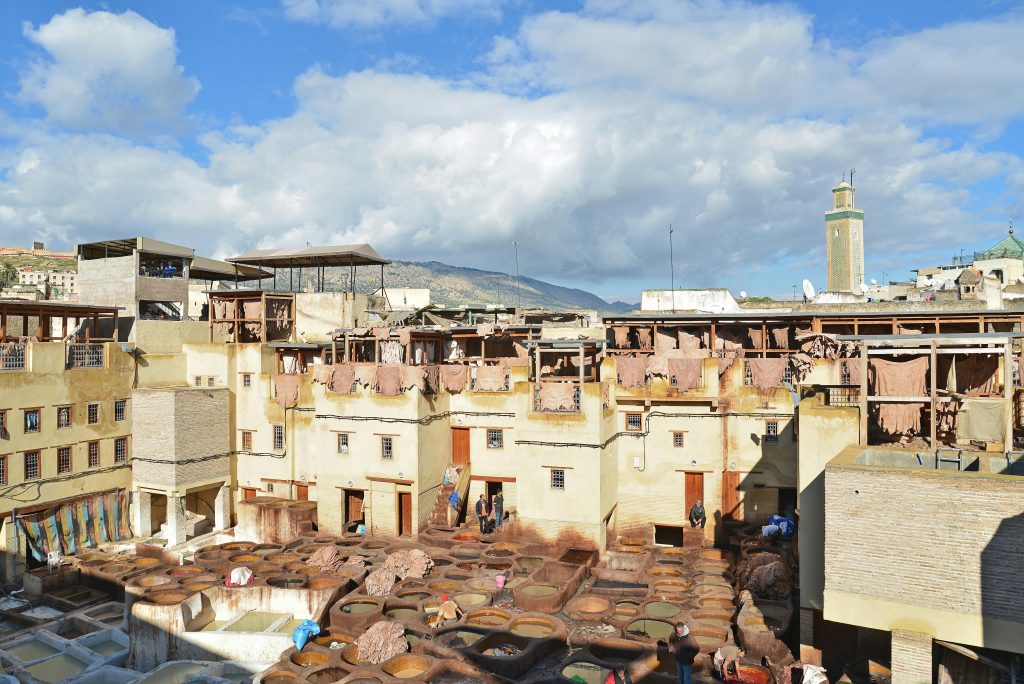
No Fes Morocco day tour is complete without visiting the Chouara Tannery. It’s the largest and most famous of the city’s three ancient tanneries. The experience is unforgettable. Your guide will lead you to a leather shop’s terrace overlooking the site. There, they’ll offer you a sprig of fresh mint to counter the powerful smell of the tanning process.
The view is extraordinary and has remained unchanged for centuries. You’ll see a honeycomb of stone vats full of colorful dyes. Workers, often waist-deep in the liquids, treat animal hides. They use ancient, natural methods like cow urine and pigeon droppings to soften the leather. They use natural dyes like poppy for red and saffron for yellow. Indeed, it’s a raw, visceral, and incredibly photogenic scene. It offers a stark look at one of Fes’s most vital industries.
The Nejjarine Museum of Wooden Arts & Crafts
The Nejjarine Museum of Wooden Arts & Crafts is another fascinating stop on a Fes Morocco day tour. It is housed in a magnificently restored funduq (a historic inn). It is a tribute to Morocco’s woodworking heritage. The building itself is a masterpiece. It’s centered around a stunning multi-story courtyard with carved wooden balconies and a fountain. It’s a peaceful oasis that showcases the incredible skill of the city’s carpenters (nejjarine).
Inside, you’ll find a fascinating collection of wooden artifacts. You can see everything from prayer beads and ornate chests to musical instruments and ancient Berber locks. The museum provides a deep appreciation for the artistry involved in this craft. After exploring the exhibits, head to the rooftop café. There you can enjoy a refreshing mint tea and a spectacular panoramic view of the medina.
Chapter 4: The Souks and Artisans of Fes
The souks (markets) of Fes are the lifeblood of the medina. They are not simply places to shop. They are vibrant communities where artisans make and sell goods, often in the same tiny workshop. Your Fes medina tour will lead you through a dizzying array of these specialized markets. A journey through them is a key part of your Fes Morocco day tour.
This journey through the souks is a journey into the heart of Moroccan craftsmanship. You are not just a consumer here; you are a witness to living history. You’ll see artisans using tools and techniques passed down for generations. This is where you can find authentic, high-quality souvenirs. You can also appreciate the immense skill and dedication that goes into creating them.
Souk el-Attarine: The Market of Spices and Perfumes
Exploring Souk el-Attarine is a must-do on your Fes Morocco day tour. As you approach it near the Kairaouine Mosque, your nose will lead the way. This is one of the most fragrant and colorful souks in Fes. Shops overflowing with mountains of spices line the narrow street. You’ll find cumin, turmeric, saffron, and the famous Moroccan blend Ras el Hanout. Additionally, you’ll see a vast array of natural perfumes, essential oils, and traditional cosmetics.
Shopkeepers here are often herbalists. They are happy to explain the uses of their wares. You can buy natural remedies, fragrant amber blocks, or beautiful dried flowers. All in all, it’s a wonderful place to buy small, authentic gifts. It’s also a great way to immerse yourself in the aromatic traditions of Morocco.
Souk Seffarine: The Place of the Coppersmiths
You’ll hear Souk Seffarine before you see it. The rhythmic clanging of hammers on metal echoes through the alleys. This sound announces your arrival at the coppersmiths’ square. Here, artisans work in open-fronted workshops surrounding a centuries-old plane tree. They hammer and shape copper, brass, and bronze into beautiful objects.
Here you can watch them expertly craft everything. They make massive cooking pots, ornate serving trays, intricate lanterns, and traditional tea sets. The intense physical labor and precise skill are mesmerizing to watch. The square itself is wonderfully atmospheric. It offers a glimpse into a trade central to Moroccan households for centuries. It’s a raw and authentic display of industrial art.
The Weavers’ Alley: A Rainbow of Silk and Sabra
You will find the weavers’ workshops in tucked-away corners of the medina. Here, you’ll see artisans working at large wooden looms. Their hands and feet move in a hypnotic dance to create beautiful textiles. They weave everything from cotton and wool to fine silk and sabra. Sabra is a “vegetable silk” from the agave cactus, known for its incredible sheen.
The vibrant colors of the threads hanging everywhere make this area very picturesque. You can watch as weavers create blankets, djellabas, and scarves with intricate patterns. Unquestionably, it’s a fantastic opportunity to buy high-quality textiles directly from the source. Understanding the slow, methodical process behind these beautiful fabrics will give you a new appreciation for their value.
Zellij Tile Masters: The Art of the Mosaic
A visit to a zellij mosaic workshop is a fascinating part of any Fes Morocco day tour. These workshops often sit just outside the medina because the process requires significant space. Here, you will witness the incredibly painstaking process of creating Morocco’s signature tilework.
The process begins with artisans hand-cutting clay tiles into tiny, intricate geometric shapes. They then lay these small pieces face-down in a precise pattern, like a giant jigsaw puzzle from memory. Finally, they pour concrete over the back to hold the pieces together. When it sets, they lift the panel to reveal the stunning, seamless mosaic. Watching this ancient art form in action is a lesson in patience and precision.
Chapter 5: Expanding Your Moroccan Adventure Beyond Fes
A tour of Fes is a profound experience. However, for many travelers, it’s just one stop on a grander journey through Morocco. The kingdom is a land of dramatic contrasts. You can find imperial cities, rugged mountains, sweeping deserts, and coastal towns. Understanding how Fes connects to other key destinations can help you craft the perfect adventure.
This section serves as your guide to what lies beyond the city walls. Perhaps you are planning Marrakech Excursions or seeking a Private Luxury Sahara Desert Tour from Casablanca. Morocco offers a lifetime of adventures. Let’s explore how you can extend your trip from Fes to other iconic Moroccan cities.
The Vibrant Pulse of Marrakech
After the intellectual depth of Fes, Marrakech offers a thrilling contrast. The city is famous for its vibrant energy and focus on spectacle. A popular travel route is the Casablanca to Marrakech tour. However, traveling from Fes is just as easy by train or private transfer. The “Red City” is famous for its Djemaa el-Fna square. It’s a whirlwind of storytellers, snake charmers, and food stalls that comes alive at night.
Your day trips from Marrakech can also include exploring the city itself. A guided tour will reveal stunning palaces like Bahia and El Badi. You can also visit the serene Jardin Majorelle and the bustling souks. These markets have a more open feel than those in Fes.
Coastal Charm and Mountain Waterfalls
For a breath of fresh sea air, a trip to Essaouira from Marrakech is a must. This beautiful, whitewashed coastal town has a laid-back, artistic vibe. Its fortified medina is a UNESCO World Heritage site. You can walk along the old sea ramparts and watch the iconic blue fishing boats in the harbor.
Alternatively, you can explore the Atlas Mountains. The Ourika Valley from Marrakech is the most accessible option, offering a glimpse into traditional Berber life. For a more dramatic spectacle, the Ouzoud waterfalls from Marrakech are breathtaking. They are the highest waterfalls in North Africa and a truly memorable sight.
Desert Adventures and Ancient Kasbahs
You don’t need a long trip to experience the desert. The Agafay Desert from Marrakech offers a fantastic alternative to the Sahara. This stone desert provides a sense of vastness and tranquility. You can enjoy camel rides, quad biking, and luxury camping under the stars.
For a journey into cinematic history, a trip to Ait Ben Haddou from Marrakech is essential. This spectacular fortified village is a famous UNESCO World Heritage site. It has served as the backdrop for many famous films and TV shows. The journey there over the High Atlas mountains is an adventure in itself.

Casablanca: The Modern Gateway to Morocco
Many international visitors begin their journey in Casablanca. This city is Morocco’s economic capital and largest metropolis. A good Casablanca Travel Guide highlights its unique blend of modern industry and stunning French-colonial architecture. It’s a crucial hub for planning many Casablanca Morocco Holiday Packages.
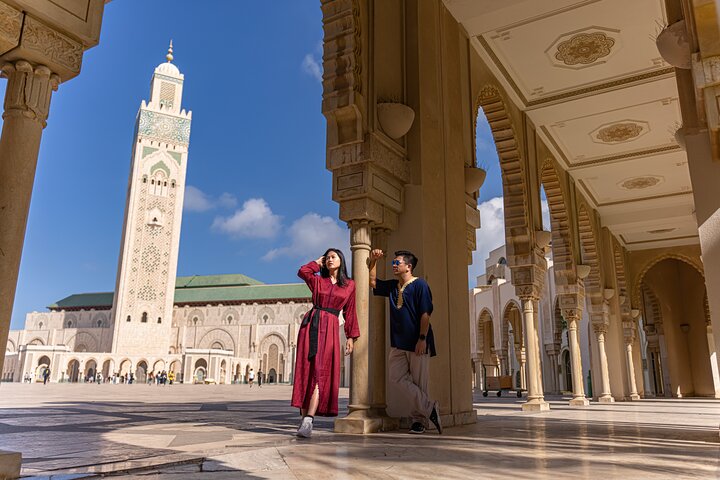
While there, one of The Best Things to Do in Casablanca is to visit the Hassan II Mosque. It is one of the largest and most beautiful mosques in the world. From here, you can begin many Morocco Tours from Casablanca. The city is the perfect starting point for your travels.
Tours and Trips from Casablanca
Casablanca is an excellent base for exploring the entire country. You can take a Tour from Casablanca to almost any destination. Popular options include the previously mentioned Casablanca to Marrakech tour. Another great choice is the Casablanca to Chefchaouen tour, which takes you to the famous “Blue Pearl” in the Rif Mountains.
Of course, the ultimate adventure for many is a Sahara desert trip from Casablanca. These multi-day Casablanca desert tours let you experience the magic of the dunes. A classic route is the Casablanca to Merzouga desert trip. It takes you to the edge of the iconic Erg Chebbi dunes for a night in a desert camp.
Private and Luxury Morocco Tours
For those seeking maximum comfort, many companies offer Casablanca private tours. These allow you to travel at your own pace with a dedicated guide. You can book Private Luxury Trips from Casablanca that include stays in the finest hotels and riads. These trips offer an exclusive and seamless way to see the country.
A Private Trip from Casablanca to Sahara Desert is the pinnacle of this experience. It combines rugged adventure with unparalleled comfort. These exclusive Casablanca Morocco tours are fully customizable. They are a perfect choice for travelers who want a carefully curated journey. These options are often the highlight of Morocco travel packages from Casablanca.
Conclusion: Your Moroccan Adventure Awaits
Morocco is a country that truly captivates the soul. Indeed, from the ancient, intellectual maze of Fes to the vibrant pulse of Marrakech and the modern elegance of Casablanca, it offers a journey of incredible diversity. A single Fes Morocco day tour can feel like stepping back a thousand years, offering a profound connection to history, art, and a way of life that endures. Consequently, it is a perfect starting point for an adventure that can take you over the Atlas Mountains, across starkly beautiful deserts, and to the shores of the Atlantic.
Ultimately, whether you choose to immerse yourself in one city or craft a journey that links them all, Morocco rewards the curious traveler. Specifically, the experiences are as varied as the landscapes. You can haggle for crafts in a bustling souk, learn the secrets of a perfect tagine, watch the sunrise from a hot air balloon, or sleep under a blanket of stars in the Sahara. We hope this guide has not only prepared you for your visit but has also ignited your excitement for the unforgettable memories you are about to create. Your Moroccan adventure is waiting.
Frequently Asked Questions (FAQ)
Here are answers to some common questions about traveling in Fes and Morocco.
1. Is Fes safe for tourists?
Yes, Fes is generally a very safe city for tourists. However, like any large city, it’s always wise to be aware of your surroundings. The main issue for visitors can be dealing with unofficial guides. For this reason, we highly recommend hiring an official, licensed guide for your Fes Morocco day tour to ensure a hassle-free experience. Additionally, it’s best to stick to well-lit main paths at night and keep your valuables secure in crowded areas.
2. How many days do I need in Fes?
You can see the main highlights of the Fes medina in one full, well-planned Fes Morocco day tour. Nevertheless, to truly soak in the atmosphere, explore more deeply, and not feel rushed, two to three days is ideal. In fact, this gives you time to revisit a favorite spot, take a cooking class, or explore the areas outside the old medina.
3. What is the main difference between Fes and Marrakech?
Fes is considered the cultural and spiritual heart of Morocco, with a medina focused on traditional craftsmanship and history. In contrast, Marrakech is known for its vibrant energy, spectacle, and tourism-focused attractions like the Djemaa el-Fna square. In short, Fes feels more preserved and traditionally-paced, while Marrakech is more cosmopolitan and energetic.
4. What is the best time of year to visit Morocco?
The best times to visit Morocco are during the spring (March to May) and autumn (September to November). Specifically, during these seasons, the weather is pleasantly warm and perfect for exploring cities and landscapes. On the other hand, the summer months (June to August) can be extremely hot, especially in inland cities like Fes and Marrakech, with temperatures often exceeding 40°C (104°F).
5. Should I hire a guide for the Fes medina?
For a first-time visitor on a Fes Morocco day tour, hiring a licensed guide is almost essential. This is because the Fes medina is a labyrinth of over 9,000 alleyways, and it is very easy to get lost. Furthermore, a guide not only navigates for you but also explains the history, protects you from scams, and can introduce you to authentic experiences you would otherwise miss.
6. Can I really do a desert trip from Casablanca?
Yes, absolutely. Although it’s a long journey, many tour operators offer multi-day desert trips from Casablanca. For example, a typical Sahara desert trip from Casablanca takes 3 to 4 days, leading you over the Atlas Mountains to the dunes of Merzouga. For those seeking ultimate comfort, a Private Luxury Sahara Desert Tour from Casablanca is, of course, an excellent option.
7. What are the must-do day trips from Marrakech?
The most popular day trips from Marrakech include several distinct options. For instance, you can visit the breezy coastal town of Essaouira from Marrakech. Alternatively, you could take a trip into the mountains to see the Ouzoud Waterfalls from Marrakech or the lush Ourika Valley from Marrakech. Another fantastic choice is the journey to the historic kasbah of Ait Ben Haddou from Marrakech. Ultimately, each excursion offers a completely different landscape and experience.