Morocco is a country where ancient traditions and modern influences blend seamlessly. From the vibrant souks of Marrakech to the tranquil Berber villages in the Atlas Mountains, every corner of Morocco tells a story of heritage, craftsmanship, and deep-rooted customs.
In this blog, we take you on a journey through Morocco’s most cherished traditions, from its iconic tea culture to its mesmerizing music and historic craftsmanship. Get ready to immerse yourself in the soul of Morocco and discover why its traditions continue to captivate travelers from around the world.
1. The Art of Moroccan Tea: A Ritual of Hospitality
Why It’s Special
Tea is more than just a drink in Morocco—it is a symbol of hospitality, friendship, and tradition. The act of preparing and serving tea is deeply rooted in Moroccan culture, with each step performed with precision and care.
The Ritual of Making Moroccan Mint Tea
- Green tea leaves (usually Chinese gunpowder tea) are boiled.
- A generous handful of fresh mint leaves is added for aroma.
- Lumps of sugar (sometimes very large ones!) are stirred in to create a sweet, refreshing taste.
- The tea is poured from a height, creating a layer of frothy bubbles on top.
💡 Did you know? Moroccan tea is always served in small glasses instead of mugs, and refusing a cup is considered impolite!
2. The Timeless Craft of Moroccan Carpets
Why It’s Special
Handwoven Moroccan carpets are one of the country’s most treasured crafts, passed down through generations of skilled artisans. Each region in Morocco has its own style, with unique patterns and techniques that reflect local heritage.
Types of Moroccan Carpets
- Beni Ourain Rugs – Known for their soft wool and minimalist geometric designs, originally woven by Berber tribes in the Atlas Mountains.
- Azilal Rugs – Featuring bold, colorful motifs, often telling personal stories of the weaver.
- Kilims – Flat-woven rugs with intricate patterns, traditionally used for tent coverings and floor decor.
💡 Tip: If you visit a carpet shop in Morocco, prepare for a long, engaging bargaining session! It’s part of the experience.
3. The Magic of Moroccan Music and Dance
Why It’s Special
Music and dance are essential elements of Moroccan culture, with diverse styles reflecting the country’s mix of Berber, Arab, Andalusian, and African influences.
Traditional Moroccan Music Styles
- Gnawa Music – A hypnotic, spiritual genre with deep African roots, featuring metal castanets (krakebs) and rhythmic chanting.
- Andalusian Music – A refined, classical style inherited from Muslim Spain in the 9th century.
- Ahidous Dance – A collective Berber dance, where men and women form a circle and move to the beat of drums and chanting.
💡 Experience it! In cities like Marrakech and Fes, you can find live Gnawa performances in traditional riads or public squares.
4. Moroccan Henna: A Symbol of Beauty and Celebration
Why It’s Special
Henna is an ancient Moroccan tradition, used to decorate hands and feet during weddings, festivals, and special occasions. The intricate patterns are believed to bring good luck and protection.
The Henna Process
- Fresh henna leaves are ground into a paste and mixed with essential oils.
- The paste is applied in detailed floral or geometric designs, usually by skilled artists.
- The longer the paste stays on the skin, the darker and longer-lasting the stain will be.
💡 Tip: If you visit Marrakech’s Jemaa el-Fnaa square, be sure to get a henna tattoo from an experienced artist, but always agree on a price beforehand!
5. The Vibrant Souks: Where Ancient Traditions Live On
Why It’s Special
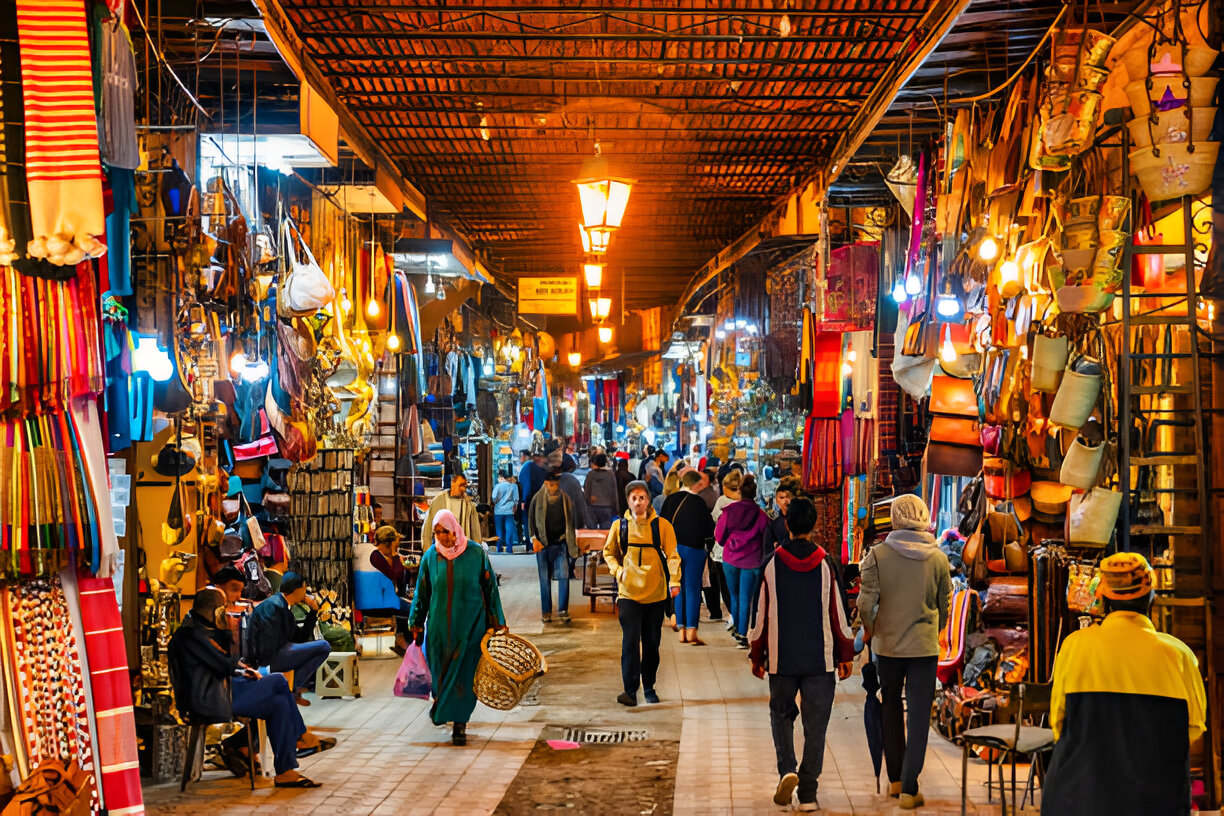
Moroccan souks (markets) are a feast for the senses, offering a glimpse into the country’s deep-rooted trading culture. From spices to leather goods, every stall has a story behind it.
Must-Visit Souks in Morocco
- Marrakech’s Medina – The largest and most famous, filled with lanterns, spices, textiles, and handmade ceramics.
- Fes’ Souk el Henna – A historic marketplace known for natural beauty products and herbal remedies.
- Rissani’s Market – A traditional Berber souk where nomadic traders sell livestock, jewelry, and dates.
💡 Bargaining Tip: Always offer half the initial price and negotiate with a smile—it’s part of the culture!
6. Moroccan Architecture: A Blend of Art and History
Why It’s Special
Moroccan architecture is a mix of Berber, Moorish, and Islamic influences, with stunning details that make every building feel like a piece of art.
Iconic Moroccan Architectural Features
- Zellige Tiles – Handcrafted, colorful mosaics seen in palaces and mosques.
- Riads – Traditional Moroccan houses with a central courtyard, often decorated with fountains and lush gardens.
- Horseshoe Arches – A signature of Moroccan design, adding a regal touch to doorways and windows.
💡 Must-Visit Sites: The Al-Attarine Madrasa in Fes and the Bahia Palace in Marrakech showcase some of Morocco’s finest architectural details.
7. The Sacred Tradition of Moroccan Hammams
Why It’s Special
Hammams (public steam baths) are a cornerstone of Moroccan wellness and social life, offering a cleansing ritual that dates back centuries.
What to Expect in a Traditional Hammam
- You enter a warm, steamy chamber to relax and open your pores.
- An attendant applies black soap (savon beldi) made from olives to exfoliate the skin.
- You are scrubbed down with a rough kessa glove, removing dead skin and toxins.
- The experience ends with a cool rinse and relaxing massage, leaving you refreshed.
💡 Tip: For an authentic experience, visit a local hammam instead of a tourist spa—you’ll feel like a true Moroccan!
Conclusion: The Timeless Soul of Morocco
Morocco is a country that honors its traditions while embracing the future, creating a cultural richness that is impossible to find anywhere else. Whether you’re sipping mint tea, wandering through a historic souk, or experiencing the warmth of Moroccan hospitality, each tradition tells a story of heritage, craftsmanship, and community.